
Weet-bix or Cornflakes? Call or text? Tie or no tie? It is estimated that adults make around 35,000 decisions every single day. Which sounds ridiculous but according to recent studies, we make almost 230 decisions per day based on food alone (Wansink and Sobal, 2007).

As your level of responsibility increases, so too does the sheer amount of decisions you must make. What to eat? What to wear? How to vote? Who do we spend our time with? Each choice we make carries with it certain consequences for the future. Most of our daily decisions are fairly trivial and require little to no thought at all but believe it or not there is a decision-making process that we all go through regardless of how big or important the decision itself is.

My most recent experience with an important purchase came in the form of buying new tyres for my car. I had been told in no uncertain terms by my local mechanic that the tyres I have been driving around on for the past few months are not only in desperate need of replacement but are in fact, so bald that they are downright dangerous. These tyres might fail at any given moment potentially leading to serious injury or loss of life and furthermore, even more disturbingly, their appalling state would surely void my insurance.
Suitably shocked, I called the nearest T-Mart to book in for some new tyres. Now, what I should have done was gone online to research the best product on the market to request and buy. However, what I actually did was assume that the store assistant at the tyre place would know which one was best and be able to explain the difference between all the various types.

Fortunately, I was correct in assuming that the sales assistant would be able to help me with my decision so that tiny bit of procrastination worked out in my favour. Given that I am a uni student, I don’t really have a lot of money to splash around so I was more than willing to go with the cheapest option available. I figured, as long as the tyres were driveable that was good enough for me. But whilst he was rattling off all the different types and levels of safety I came to realise that there is a great deal of thought and that goes into decision making. It is a process that requires in depth analysis.
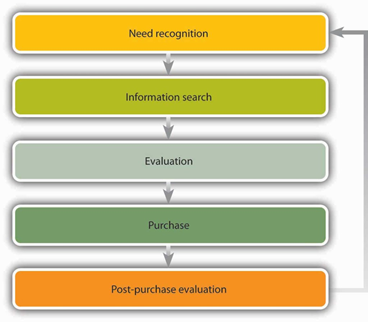
I had already completed step 1: Need Recognition (my tyres had reached a crisis point and were no longer safe to drive) and I was in the process of step 2: Information with the sales assistant rattling off all the pros and cons of each product. Step 3: Evaluation had to be done on the fly. I want to save money but I also want value for money as well as safety. I also didn’t want to get dragged into habitual re-purchasing of a product when there is a better product available so I was open to change. In the end, I weighed the value of buying a cheap and crappy tyre that would barely last a year or spending a bit of extra dosh to get a quality product that would last a lot longer.

Eventually, after much deliberation (all 3 minutes of it) I decided to make the adult choice and go with the expensive but safe option.
References:
https://go.roberts.edu/leadingedge/the-great-choices-of-strategic-leaders
https://www.reuters.com/brandfeatures/venture-capital/article?id=81446
 Uni Blogging